

Last week, Teis Arets (QoLEAD) participated in the first DEMPACT Summer School in Driebergen. During this five-day intensive programme, implementation was the central theme. Below, he shares his experiences and reflections.
What happens after research?
What happens to my research once my PhD project, and its funding, come to an end? How can I make sure my research actually contributes to dementia care?
These were the questions we explored during the first DEMPACT Summer School in Driebergen. For five days, implementation took centre stage. Not only as a final step after research, but as something that deserves attention throughout the entire research process.
Learning from people who have done it before
One of the most inspiring parts of the Summer School was hearing from researchers and designers who had already translated their innovations into practice.
Projects such as CRDL and Cue2Walk showed that implementation is rarely straightforward, but that research can successfully find its way into real-world settings. Their stories made the challenges and opportunities of implementation much more tangible and offered valuable lessons for researchers who hope to create impact beyond academia.
Looking beyond the research project
Another valuable insight came from conversations with Sophie Habets and Marjolein van Rooijen from ZonMw and Jolande Zijlstra and Simone Hermans from Health~Holland. They shared funding opportunities that can help researchers continue developing and implementing their work after a research project has ended.
What struck me was how little attention is paid to this topic during a PhD trajectory. As PhD candidates, we learn how to design studies, collect data, and publish findings, but much less about what happens afterwards. How do you continue building on your research once your project funding ends? Which funding schemes exist? And how do you move from scientific knowledge to practical adoption?
The Summer School highlighted that creating impact does not stop when the research is finished. In many ways, that is where the next phase begins.
“Implementation is not something for ‘after’ your research, but something to think about during your research.”
Developing an implementation plan
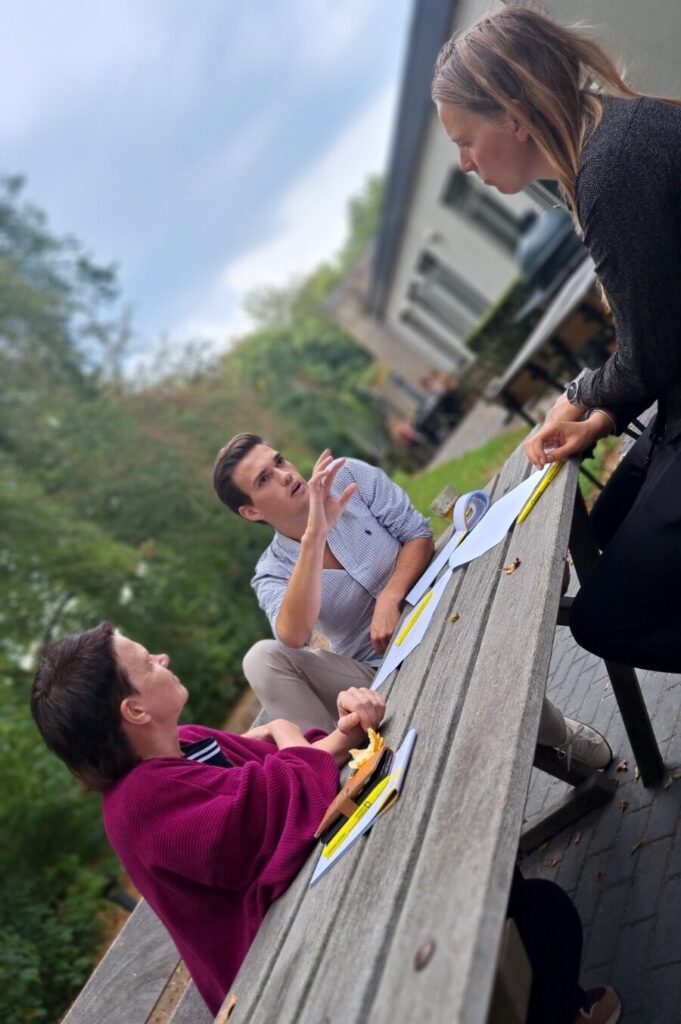
Throughout the week, I worked on an implementation plan for my own project. On the final day, I pitched the plan and received valuable feedback from the jury and fellow participants.
Those discussions challenged me to think more concretely about the next steps for my research and how I can maximise its impact beyond academia. The feedback also encouraged me to keep implementation firmly on the agenda as my project develops.
Looking ahead
The Summer School was not only about workshops and lectures. The other participants, all bringing their own experiences in dementia research, were an endless source of inspiration and new perspectives.
I left Driebergen with a head full of ideas, new contacts, and a much clearer picture of how implementation can become part of the research journey itself.
One thing became very clear during the week: research should not end at the final page of a dissertation. The real challenge is making sure it continues to create value afterwards.
What does this mean for QoLEAD?
At QoLEAD, we aim to contribute to meaningful innovation in dementia care. The insights from the DEMPACT Summer School underline the importance of thinking about implementation from the start and working together with researchers, practitioners, funders, and people living with dementia to ensure that knowledge and innovations can make a real-world impact.